Get better resultsAI enablement courseGet better results
Case study

Bob and Kale: from hand-drawn 2D to AI 3D.

The same two characters, made approximately ten years apart. I drew the first version frame by frame. I rebuilt the second in 3D through the studio’s AI pipeline. Side by side, they show what changed in the work and what did not.

Characters
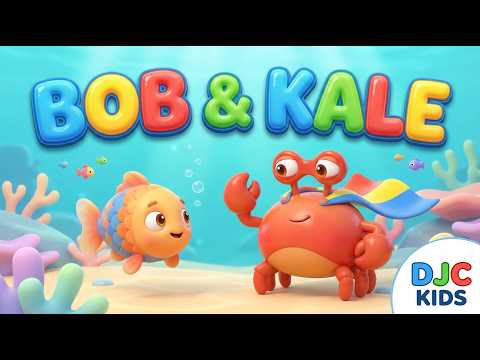
Bob and Kale, from an in-house picture book
Then, circa 2015
Frame-by-frame 2D, every frame drawn by hand
Now
3D in Google Flow, approximately 18 clips
Production time
3 to 4 months then 2 to 3 hours
Production
Bob and Kale
Take
A · 2D original
Method
Hand-drawn frames
Production time
3 to 4 months
Ref A · SourceCirca 2015
Production
Bob and Kale
Take
B · AI 3D
Method
Google Flow clips
Production time
2 to 3 hours
Ref B · RemakeSame characters, same story

Side by side

Stage2D originalAI 3D version
SourceIn-house picture bookThe characters from the 2D original
Character artDrawn in Illustrator and PhotoshopThe 2D designs turned into 3D in Google Flow
ConsistencyEvery frame drawn by hand to the same designLocked character profiles keep Bob and Kale the same in every clip
PlanningStory and lyrics taken from the bookOriginal concept written by hand first; ChatGPT, Claude and Gemini used to plan scenes, pace the story and match lyrics
AnimationEvery frame drawn by handOne scene per clip, generated in Google Flow
Unit of workA single drawn frameA clip of up to 10 seconds, approximately 18 per video
AssemblyFrames sequenced by hand on the PowerDirector timelineClips cut together in PowerDirector, every transition built by hand; finishing in Photoshop
MusicLyrics by David Martin; music and vocals by Frank Ludwig (formerly of Trooper)Song produced with Suno
Production time3 to 4 months2 to 3 hours
Main challengeSmooth motion from hand-drawn frames in an editor built for video, not animationKeeping both characters recognisable across separately generated clips

How the characters moved from 2D to 3D

  1. 01Start from the original designs

    The hand-drawn character art from the book and the first video is the reference. Nothing is redesigned from scratch.

  2. 02Convert the designs to 3D

    Google Flow turns each flat character into a 3D design. The test is simple: the 3D character must still read as the 2D one.

  3. 03Lock the character profiles

    Each approved 3D design is saved as a locked character profile. Every clip is generated from the same profile, so Bob and Kale look the same in every scene.

  4. 04Write every scene first

    I write the concept by hand before any AI is involved. ChatGPT, Claude and Gemini then help plan each scene, pace the story and fit the lyrics. One scene becomes one clip.

  5. 05Generate and assemble

    Google Flow renders each clip, up to 10 seconds long, and Suno produces the song. I cut approximately 18 clips together in PowerDirector, build every transition by hand and finish in Photoshop.

What changed

  • Production time fell from 3 to 4 months to 2 to 3 hours.
  • The unit of work moved from a single drawing to a whole scene.
  • Drawing each frame gave way to directing each scene.
  • The same method now produces other looks, including anime and steampunk (see the titles below).

What stayed the same

  • The characters and story come from the studio's own picture book.
  • I still make every edit and transition by hand in PowerDirector.
  • One person handles story, design, animation and edit.
What the comparison shows

AI builds on the original design work. Because Bob and Kale were already designed by hand, the 3D version took hours instead of months. That artwork is still the reference every clip has to match.

AI-assisted production

ORIVEX ARC-7.

A 45-second AI-directed product film. Every shot, line of narration, graphic and note of music generated or assembled with AI tools under human direction. How it was made →

Production notes

Selected titles.

Four more titles from DJC Kids, the studio’s animation channel, each with its own art direction. The notes give the specifications, the hardest production challenge and the outcome.

Title 01 · Steampunk

Brave Little Spider

Format
Sing-along
Art direction
Steampunk
Concept
Original story, human-written
Planning
ChatGPT, Claude, Gemini
Animation
Google Flow
Post-production
PowerDirector, Photoshop
Challenge

Pacing a sing-along so each lyric line lands on its own clip within the 10-second limit.

Outcome

A complete steampunk sing-along produced with the same pipeline as the 3D titles.

Title 02 · Anime

Eggy and Peggy

Art direction
Japanese anime
Concept
Original story, human-written
Planning
ChatGPT, Claude, Gemini
Animation
Google Flow
Post-production
PowerDirector, Photoshop
Challenge

Holding one art direction steady across clips generated one scene at a time.

Outcome

A Japanese anime look, informed by ten years living and working in Japan.

Title 03 · Book to 3D

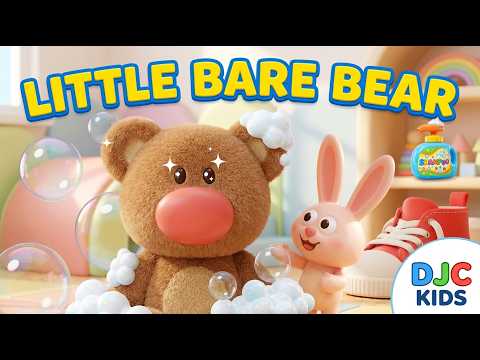
Little Bare Bear

Source
In-house 2D picture book
Concept
Original story, human-written
Planning
ChatGPT, Claude, Gemini
Animation
Google Flow
Post-production
PowerDirector, Photoshop
Challenge

Turning a flat book illustration into a 3D character that still reads as the same bear.

Outcome

A character from the printed page brought to screen in 3D.

Title 04 · Claymation

Nimoy and Ross

Format
Sing-along
Art direction
Claymation, AI-assisted
Music
Suno
Concept
Original story, human-written
Planning
ChatGPT, Claude, Gemini
Animation
Google Flow
Post-production
PowerDirector, Photoshop
Challenge

Claymation is one of the hardest looks to hold in AI video. Every shot has to read as hand-sculpted plasticine. Surface texture and tool marks must stay put instead of shimmering. The timing has to step like stop-motion, rather than follow the smooth interpolation generators default to. Lighting and depth of field have to sell a miniature set. The characters also have to stay on model, without softening or morphing from one clip to the next.

Outcome

A claymation sing-along built on the same pipeline as the 3D titles. It starts from an original human-written story and a scene plan. Clips are generated in Google Flow from locked character profiles that keep Nimoy and Ross on model. Every shot is reviewed against the look before it goes into the edit.

Pipeline

How a DJC title is produced.

The current pipeline, from script to published video. Each stage produces a defined output before the next one starts.

  1. 01
    Story and lyrics

    An original story, often adapted from one of the studio's in-house picture books, with lyrics written to it.

    • Original IP
  2. 02
    Character design

    Characters start as in-house 2D artwork. Google Flow restyles them as 3D, anime or steampunk designs, and each design is locked as a character profile.

    • Illustrator
    • Photoshop
  3. 03
    Scene plan

    I break the human-written concept into scenes before any footage exists. ChatGPT, Claude and Gemini help pace the story and match lyrics to scenes.

    • ChatGPT
    • Claude
    • Gemini
  4. 04
    Animation

    Approximately 18 clips per video, each up to 10 seconds, generated one scene at a time.

    • Google Flow
  5. 05
    Edit and publish

    I assemble the clips and build the transitions, then write the titles and metadata and schedule the release on YouTube.

    • PowerDirector
    • Photoshop
    • YouTube
Studio and systems

Built on the same approach.

DJC Media is an independent studio in its own right, and it works the same way as the AI systems on this site, with structured reference material, a clear brief and a person who approves the final cut.

Directing, literally

Much of the director mindset behind my AI work was shaped here. I plan every title scene by scene, brief it clip by clip and approve it before release.

Context engineering for characters

Locked character profiles do for animation what the knowledge base does for company agents. Every clip draws on one approved source, so the characters stay consistent.

Craft as the quality bar

Hand-drawn artwork is the reference every AI clip is measured against. Knowing what good looks like is what makes the speed worth having.

Studio toolkit

Tools by stage.

The software I use most across DJC productions, grouped by stage. It is not the full kit; new tools join when a production needs them.

Writing and planning

  • Original stories and lyrics
  • ChatGPT, Claude, Gemini (scene planning, pacing, lyric matching)

Design

  • Adobe Illustrator
  • Adobe Photoshop (expert)

Animation and music

  • Google Flow (3D character design, locked character profiles, AI animation)
  • Suno (AI music)
  • Frame-by-frame 2D

Edit and publishing

  • CyberLink PowerDirector
  • YouTube titles, metadata and SEO
Milestones

Studio history.

  1. 2006
    DJC founded

    Independent media and publishing brand, run alongside a full-time career.

  2. 2012
    Maker Studios (Disney) creator network

    Eight years as a network member, working with assigned partner managers on collaborations and channel promotion.

  3. 2016
    BroadbandTV creator network

    Eight years as a network member alongside Maker Studios.

  4. Books
    Seven picture books published

    Dave the Canadian Beaver was read at the Embassy of Canada in Tokyo for the 85th anniversary of Canada-Japan diplomatic relations. I also helped editorial cartoonist Adrian Raeside bring Dennis the Dragon back into print.

  5. Music
    Original song with Frank Ludwig

    Music and vocals for the original Bob and Kale by Frank Ludwig, formerly of Trooper.

  6. Today
    Over ¼ billion views, 460+ videos

    288K+ subscribers, with new titles produced through the AI pipeline.

From the DJC Media studio

Picture books and characters.

Many of DJC Media’s characters start on paper, drawn by hand. These come from the studio’s seven illustrated picture books and its animated series, from Dave the Canadian Beaver to Bob the crab of Bob and Kale. I designed them all in Illustrator and Photoshop. Select any image to enlarge it.

Book signing poster
DJC Kids channel icon
Dave the Canadian Beaver Goes to Japan, bilingual picture book
Dave the Canadian Beaver Goes to Japan, spread
The Bluenose
Dave at a torii gate
Jumbo takoyaki
Cranes
Dave meets an orca
Dave and the moose
Pond hockey
The slide
Home
DJC Kids characters
Bob the crab, from Bob and Kale
Edgar the Elephant
Busy bee
Eagle, character design
Frog
Hermit crab
Bunny
Seven the bulldog

Next: writing.

Articles on AI, content and video, and the Director's Chair guides.

Read the blog →